Home & family
Family Emergency Binder: What to Include (Checklist)
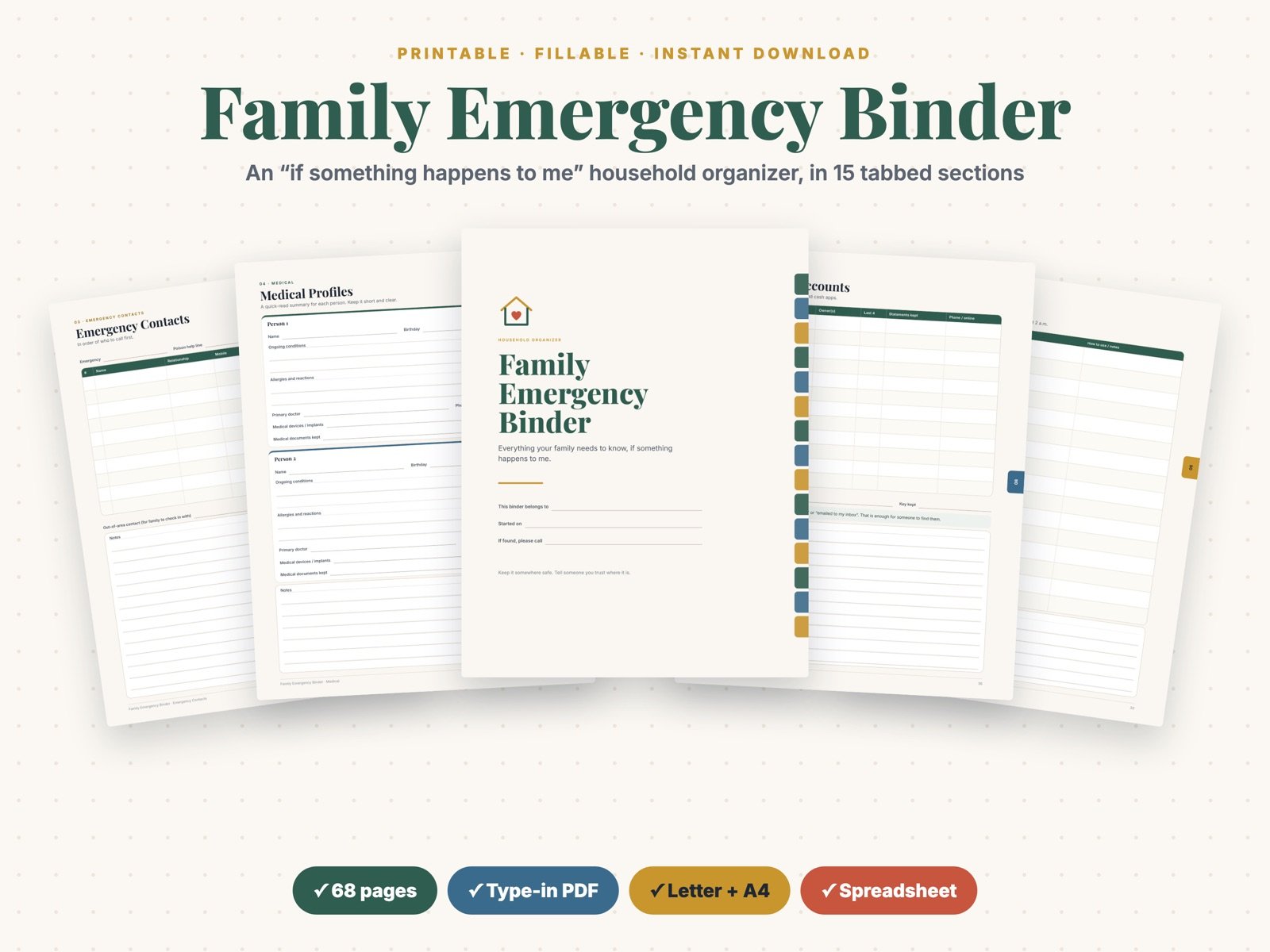
If you were suddenly in hospital, would your family know which bills are due, where the insurance papers are, or who your doctor is? A family emergency binder puts the answers in one place.
The checklist
- Emergency contacts: family, neighbors, doctors, employer, school.
- Medical: conditions, medications and doses, allergies, insurance, blood type.
- Household: utilities, service providers, where the water and power shut-offs are.
- Money: bank and account list (institution and last 4 digits only), bills and autopays, debts, insurance policies.
- Digital life: devices and accounts, and where passwords are kept (not the passwords themselves).
- Documents: where birth certificates, passports, titles and policies are stored.
- Kids, dependents and pets: routines, care instructions, vet details.
- Emergency plan: meeting places, go-bag checklist, evacuation routes.
- Wishes and letters: personal preferences and notes to loved ones.

Keep it safe
- Never write full account numbers, Social Security numbers or passwords in the binder.
- Store it somewhere safe but findable, such as a fire-resistant box, and tell one or two trusted people where it is.
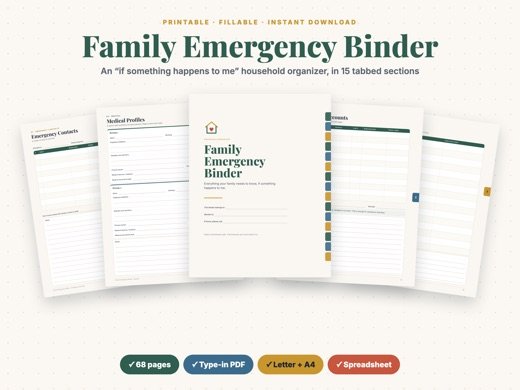
Family Emergency Binder
A 60+ page “if something happens to me” organizer: contacts, medical, money, home, digital life and more.
See it for $17.99Keep it current
Review it once a year (New Year's Day is easy to remember) and after big life events: a move, a new baby, a new job or a new account.
An emergency binder is an organizer, not a legal document. Speak to a qualified professional about wills, trusts and estate planning.
Helpful resources
- Ready.gov: make a family emergency plan
- Ready.gov: financial preparedness
- American Red Cross: how to prepare for emergencies
Free sample pack
Try 6 printables free
A bingo card, a large-print word search, a meal plan, a chore chart, an emergency-contacts page and a practice plan. Print them tonight.